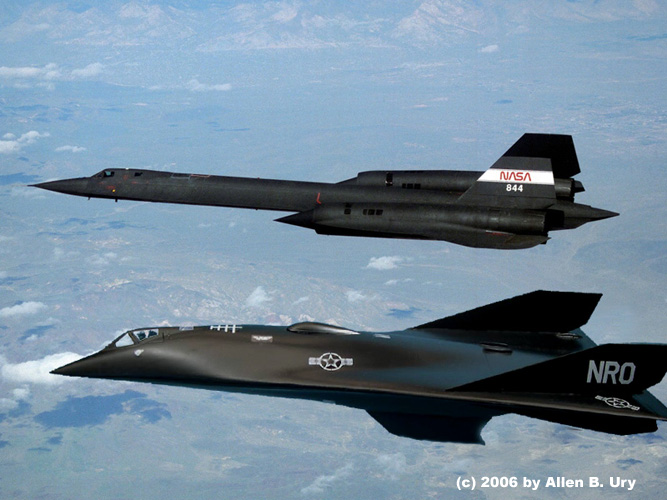
The X-47B has landed -- and that's some big news.
The tailless Northrop Grumman-built drone made a historic arrested landing on an aircraft carrier at sea on Wednesday, the U.S. Navy tweeted just a little bit ago, presaging a new era for the use of unmanned aircraft in military operations.
Aircraft landings on a carrier are a tricky endeavor even for experienced pilots, as the flight deck -- not exactly spacious to start with, and crowded with planes, people, and gear -- rises, falls, and sways with the ocean waves. Today's landing brought a new wrinkle: the X-47B Unmanned Combat Air System (UCAS) is designed to fly largely on its own, with no pilot aboard and with minimal intervention from shipboard operators.
To stop their forward momentum in the shortest space possible, carrier aircraft have a hook on the underside of the fuselage that latches onto cables stretched across the flight deck. The X-47B had practiced arrested landings on dry land earlier this year.
Today's precision landing was the latest, and perhaps the most significant, milestone for the X-47B, a technology demonstrator -- actually, there are two of them -- that the Navy and Northrop Grumman have been trying out step by carefully measured step over the last several years.


"It isn't very often you get a glimpse of the future. Today, those of us aboard USS George H.W. Bush got that chance," said Secretary of the Navy Ray Mabus in a statement. "The operational unmanned aircraft soon to be developed have the opportunity to radically change the way presence and combat power are delivered from our aircraft carriers."
In May, the X-47B made its first-ever catapult launch, taking off from the USS George H.W. Bush for a 65-minute flight, and in the ensuing days the aircraft made nine touch-and-go landing maneuvers.
The jet-powered X-47B has a wingspan of 62 feet, about 17 feet wider than the Navy's F/A-18 Super Hornet (though it's about 22 feet shorter from nose to tail), and it weighs in at about 44,000 pounds. It has a top speed in the "high subsonic" range, a ceiling of 40,000 feet, and a range of about 2,100 nautical miles.
The Navy has described it as "strike fighter-sized," and with "combat" as a key part of the UCAS acronym and with a weapons bay as part of the design, you'd be tempted to think that the X-47B is this close to flying into a hot zone. Not so. Though there's some testing left to be done -- including, perhaps, automated drone-to-drone refueling in 2014 -- the X-47B is but an experimental precursor to actual production models of a design that's yet to be determined.
That phase of things could get under way later this year as the Navy heads into the early stages of its UCLASS ("unmanned carrier-launched airborne surveillance and strike") program, for which the X-47B will surely be a contender, along with competing pitches from other defense and drone heavyweights including Lockheed Martin, Boeing, and Predator maker General Atomics.


 Posts
Posts